Customs Moves to Cut Port Delays Through Post-Clearance Audit
The Nigeria Customs Service (NCS) is intensifying reforms to its Post-Clearance Audit (PCA) system to speed up cargo clearance, improve compliance and protect government revenue.
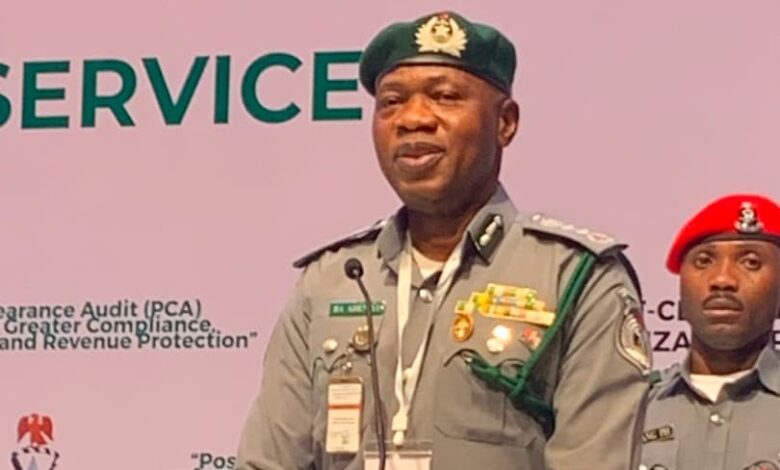
The Comptroller-General of Customs, Bashir Adewale Adeniyi, disclosed this on Thursday in Lagos at a PCA Sensitisation Programme themed, “Post Clearance Audit (PCA) Reform for Greater Compliance, Transparency and Revenue Protection.”
Adeniyi said the reform would enable Customs to increase revenue collection while reducing delays and the cost of doing business by shifting more compliance checks from the ports to post-release audits.
He said a recent Time Release Study at Tin Can Island Port showed that containers spent an average of five days at the port before exit, although physical examination took only a few hours.
The study, which covered 601 import declarations, found that 98.7 per cent of consignments experienced nearly four days between booking for examination and physical exit. Adeniyi attributed the delays largely to manual processes, poor coordination and waiting time across the clearance chain.
He said the findings reinforced the need to reduce physical intervention and rely more on PCA for transactions that do not require examination at the port.
The CGC also disclosed that 247 companies had been admitted into the Authorised Economic Operator (AEO) programme, with 15 making voluntary disclosures that generated over ₦1 billion for government.
He said the programme had reduced the average clearance time for participating businesses from 156 hours to 43 hours. The 247 AEO companies also generated more than ₦3 trillion in Customs revenue in 2025, accounting for about 43 per cent of the Service’s total revenue.
Meanwhile, the Assistant Comptroller-General in charge of PCA, Babatunde Olomu, said Customs recovered ₦27.2 billion through PCA interventions between August 2025 and August 2026, a 27.7 per cent increase over the ₦21.3 billion recovered during the previous corresponding period.
Olomu said collaboration with the World Customs Organisation (WCO) had strengthened Customs’ risk-based enforcement and professional capacity. He also announced plans for Customs officers to undertake peer-learning with the Kenya Revenue Authority.
Assistant Comptroller G.O. Attah said the Nigeria Customs Service Act 2023 provides the primary legal framework for PCA, supported by international customs and trade facilitation instruments.
He warned that violations could include undervaluation, wrong tariff classification, fraudulent documentation, non-declaration and diversion of bonded goods.
Attah said refusal to comply with a PCA request attracts a ₦1.5 million fine and could lead to suspension from Customs transactions after seven days. He added that fraudulent use of counterfeit Customs documents could attract a ₦10 million fine, up to 10 years’ imprisonment, or both.
Adeniyi said similar sensitisation programmes would be held in Kano and Port Harcourt to deepen stakeholders’ understanding of the PCA regime.